“This is nuts.”
A New Jersey mechanic’s auto inspection turned into a viral moment when he discovered tires so damaged they were literally held together with duct tape. The find sparked debate about whether the Garden State needs more comprehensive vehicle safety inspections.
Will Niven (@willniven) shared the crazy footage in a 50-second TikTok video that has garnered over 109,000 views since it was posted on November 18. The clip shows Niven, who works as an auto mechanic when he’s not racing stock cars and dune buggies, examining a customer’s vehicle that came in for an emissions test.
“So here in New Jersey, they only do emissions inspections when you go get your car checked out by the state and get your sticker. They don’t really care. They don’t look at much,” Niven says while spinning the car’s wheels on the lift.
What he found next left him and his viewers stunned.
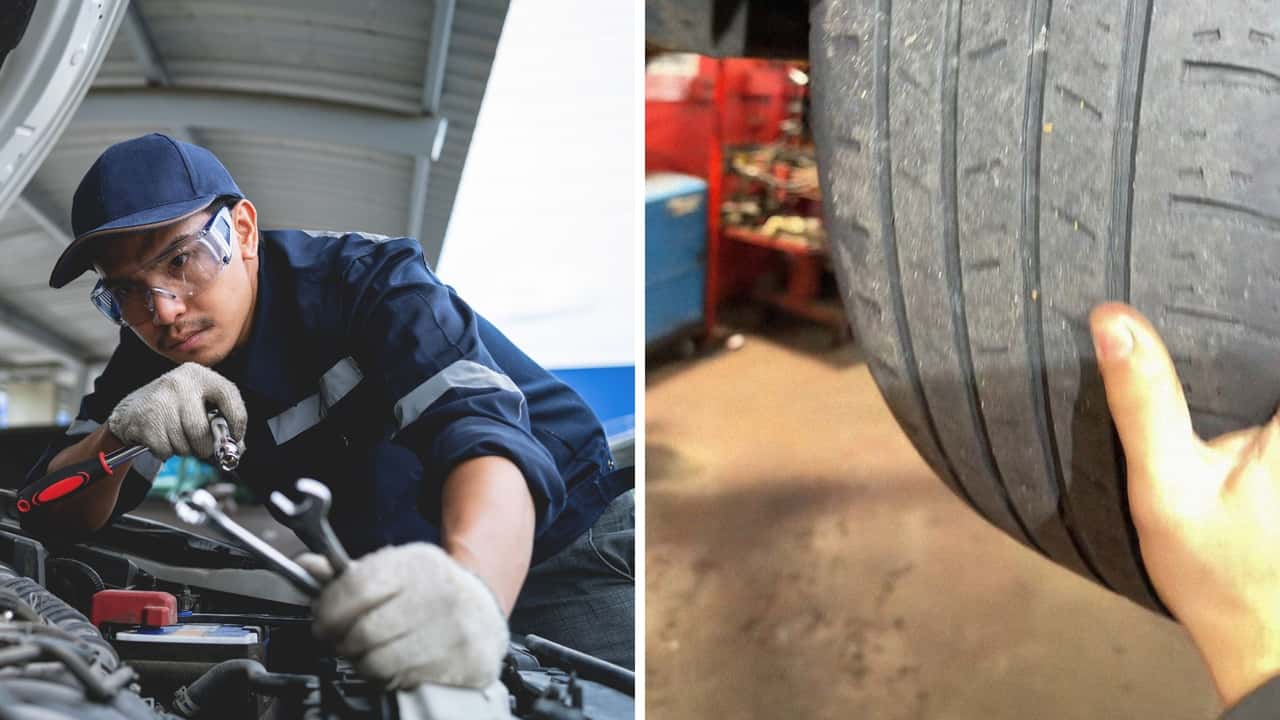
As Niven examined each tire, the extent of the damage became increasingly clear. The tires were all in bad condition, but the worst of them was essentially destroyed, with chunks missing and structural integrity compromised to the point where duct tape was the only thing preventing complete failure.
“Duct tape. This is nuts. And it gets stuck on the fender,” Niven says as he shows viewers the makeshift repair.
What Drivers Are Saying
The video caption posed a critical question: “These tires are from 2015. Should New Jersey do a more in-depth state inspection like some other states do to prevent situations like this.”
Viral stories from across the web
Our team of experts tracks what owners are saying about car-shopping, repairs, the daily driving experience and more on social media.
Niven’s worries extended beyond just the mechanical failure. “I mean, he drove around like this,” he says. “At what point does the safety of the other people on the road come into play?”
Unlike many states that require comprehensive annual safety inspections, New Jersey eliminated mandatory safety inspections for most passenger vehicles in 2010, focusing primarily on emissions testing. The state argued that modern vehicles are safer and better maintained than in decades past, and that abolishing safety checks would save money.
The state’s inspection program now ensures vehicles meet environmental standards rather than checking critical safety components like tires, brakes, or suspension systems. Only commercial vehicles, including taxis, limousines, and buses, require annual safety inspections.
This means vehicles like the one in Niven’s video can legally operate on New Jersey roads, despite potentially having life-threatening mechanical issues.
Many states maintain more comprehensive inspection programs. Pennsylvania requires annual safety inspections that examine tires, brakes, lights, and other critical components. New York mandates annual safety inspections for all registered vehicles, checking items including seat belts, brakes, steering, suspension, tires, and windshield wipers. Massachusetts also requires annual safety and emissions inspections conducted at licensed inspection stations. These inspections are designed to catch exactly the kind of dangerous conditions Niven discovered.
The video sparked intense debate, with viewers split between support for more comprehensive inspections and resistance to government oversight.
Tyler wrote, “As much as I hate government nonsense I do think yearly SAFETY INSPECTIONS are a good thing.”
Others pushed back, citing experiences with strict inspections. Said one, “Until you live in PA and you realize you have to spend $2,500 on a new exhaust system on your 7-year-old car because there’s a little rust.”
SPAMMY also criticized Pennsylvania’s system: “Pa needs to get rid of inspection altogether until they can fix their roads.”
Several mechanics echoed Niven’s concerns about road safety. Bryan Roberts wrote, “We would probably have a lot less accidents if we inspected for safety in this state. It amazes me, some of these cars in my bay.”
The comment that perhaps best captured the dual nature of the situation came from Thatoneguyzach, who wrote, “As a guy on the internet, this is hilarious, as a tire technician, this is horrifying.”
Some commenters pointed to financial constraints as a reason why drivers might resort to dangerous temporary fixes. MechEDC claimed, “A new set of tires is 1k. That is why.”
“That’s so false. You don’t need top tire brands. Research goes a long way,” Niven replied.
The actual cost of tire replacement varies significantly. According to Consumer Reports’ 2024 survey, members paid an average of $212 per tire, with a median installation cost of $31 per tire—although more than half had their tires installed free of charge. Industry data shows a complete set of four tires typically ranges from $460 to $1,280, depending on vehicle type and tire quality.
The incident highlighted a fundamental tension between individual responsibility and public safety regulation. Chloe captured this frustration perfectly: “So I hit ONE pothole and blow a tire but then THIS GUY gets to drive around WITH THOSE TIRES?”
The concerns are well-founded. According to National Highway Traffic Safety Administration (NHTSA) figures, tire-related issues cause approximately 11,000 crashes annually, resulting in roughly 200 deaths. NHTSA research shows that nine percent of vehicle crashes involve pre-crash tire problems, and tire blowouts are more likely to occur on highways and interstates where vehicles travel at higher speeds.
A tire failure at highway speeds can cause loss of vehicle control, resulting in rollovers and multi-vehicle pile-ups, which put innocent drivers at risk.
The debate raises questions about the role of government regulation in balancing public safety with individual freedom and compliance costs.
Motor1 reached out to Niven via TikTok direct message. We’ll be sure to update this if he responds.
More From Motor1
We want your opinion!
What would you like to see on Motor1.com?
– The Motor1.com Team